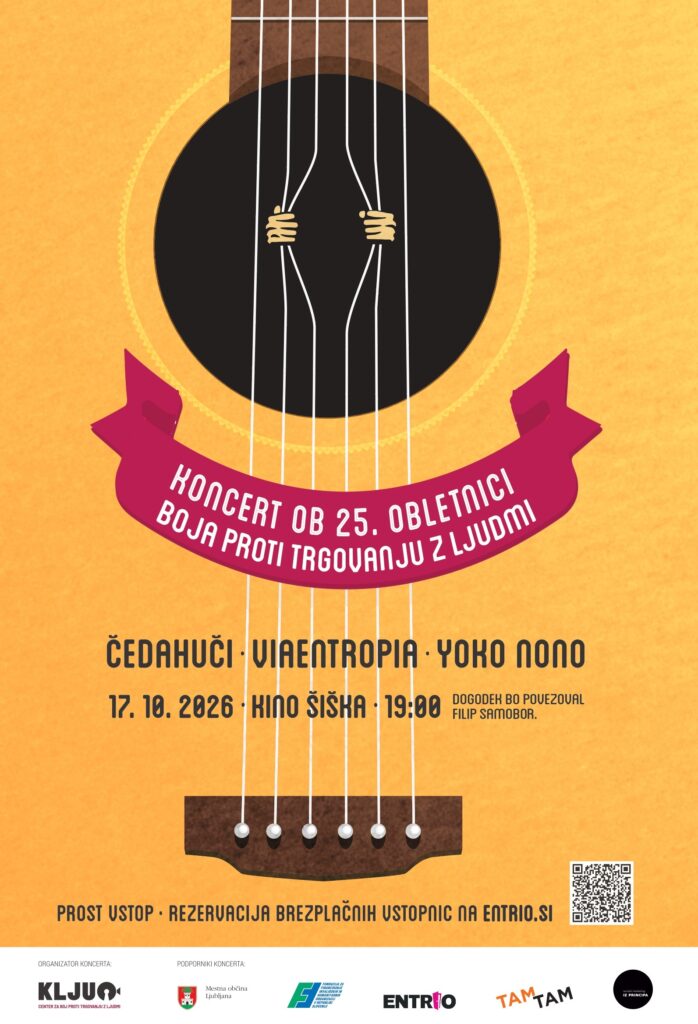
18 October — European Anti-Trafficking Day
18 October is European Anti-Trafficking Day. This year, as every year, we want to give the day particular attention and draw attention to an issue we are grappling with — one that, in several areas and at several levels, appears to be slipping entirely out of control. Human trafficking rests on two basic premises — first, on […]

Contents
18 October is European Anti-Trafficking Day.
This year, as every year, we want to give the day particular attention and draw attention to an issue we are grappling with — one that, in several areas and at several levels, appears to be slipping entirely out of control.
Human trafficking rests on two basic premises. First, on exploiting the vulnerability of people who come from poorer or dangerous environments and/or live with the consequences of traumatic experience (war, a history of violence, sexual abuse, addiction, mental health difficulties), or who, looking for a better life, believed an exploiter's promises. And second, on the fact that there are people willing to exploit others for profit and to satisfy their own needs — for control, for money, for the abuse of those with less social power (children, unaccompanied children, marginalised groups, women, foreign nationals).
We would add a third premise, which is at least indirectly why the number of trafficking victims is rising rather than falling, why people who experience trafficking do not seek help and support, and why — when they do — bureaucratic obstacles sometimes put it out of reach: the ineffectiveness of the institutions responsible for prosecuting this offence and for condemning every form of exploitation, together with systemic corruption, which undermines trust in the rule of law both for victims and for all of us who work directly with them and support them on the way to a safe life.
The problems we see, where there is no improvement — and in some cases the situation is getting worse — are these:
This year again, children exploited for prostitution remain invisible. Through our awareness campaign on social media we keep pointing to abuse that is happening close to home, and last year we put together a set of proposals for tackling the issue — but at this point we see no progress.
Alongside the exploitation of people for prostitution — still present, and still often escaping effective prosecution — victims of this abuse, adults and children alike, now face modern forms of sexual exploitation: online prostitution and e-pimping. There is a belief that because such abuse happens online it leaves no mark; the testimony of people who have lived through it and trusted us with their stories says otherwise. They face severe distress, feelings of worthlessness, fear and shame, and the other consequences of traumatic experience.
The situation of migrant workers subjected to various, often extremely severe and cruel forms of labour exploitation and forced labour is also acute. In 2025 alone, Društvo Ključ came into contact with around 50 people reporting serious abuse — threats, extortion, debt bondage, physical and psychological violence, and demands to work every day, ten hours or more, in poor conditions and for very low pay. Because these forms of exploitation are not currently recognised in Slovenia as trafficking in human beings, they have no access to crisis or safe accommodation; even when they do seek help they often have to return to the exploitative employer, because they see no other option — or genuinely have none.
And then there are all the invisible victims of domestic servitude, forced begging, forced criminality and forced marriage.
The fight against human trafficking is a fight against the gravest violations of human rights, and should therefore be a priority for any state governed by the rule of law. Such a state honours its international commitments and guarantees the safety and human rights of everyone, without distinction on the basis of personal circumstances. A state that fails to meet its obligations to prevent, detect, investigate and prosecute the offence of human trafficking; a state that responds too slowly or ineffectively; a state that cannot provide safety and protection to victims of exploitation — that state does not deserve to be called a state governed by the rule of law. Nor does a state that cannot (or will not) see the scale of this phenomenon and adjust its response accordingly, nor one in which human rights standards fluctuate according to current staffing capacity, financial means or political appetite.
We believe that protecting victims of human trafficking is a collective responsibility, not the responsibility of individuals and non-governmental organisations. And it falls to all of us to keep hold of the empathy, respect and humanity that the world currently seems to be so short of.